

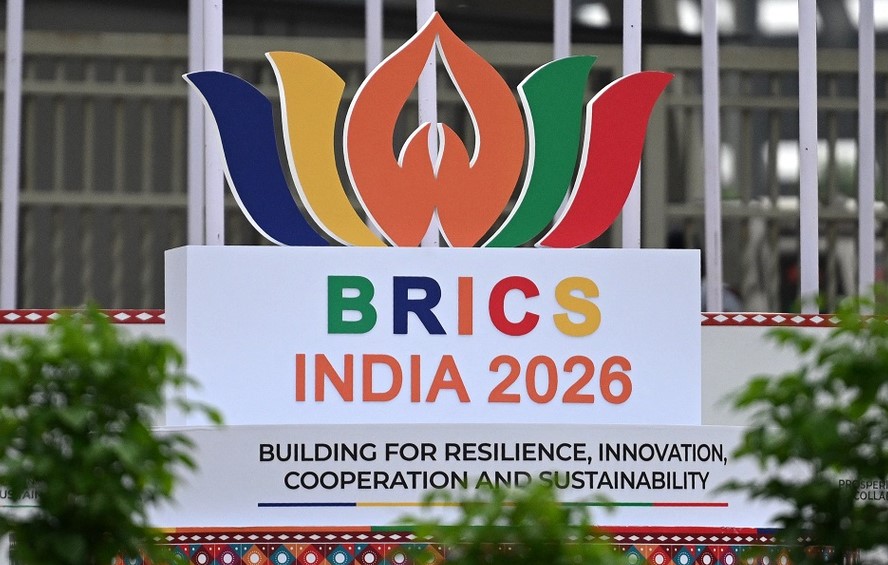
Over the past decades, the international system has witnessed profound transformations in the distribution of political and economic power, leading to the emergence of new powers and centers seeking to influence the rules of global governance and the mechanisms of international decision-making. In this context, BRICS has emerged as one of the most prominent manifestations of the shift toward a more pluralistic international system, particularly in light of the expansion of its membership, the growth of its economic and political capabilities, and the development of cooperation mechanisms among its members. It is evident that the group’s role is no longer limited to economic coordination; rather, it has extended to proposing common visions and positions regarding the reform of international institutions, the strengthening of multilateralism, and the redistribution of power within the global system. This raises a legal question concerning the extent to which these transformations can influence the structure and rules of the international legal order.
This issue is particularly important in light of growing criticism of the existing international governance structure, especially with regard to the imbalance between the current distribution of authority within international institutions and the transformations that have taken place in the international community. BRICS countries have repeatedly called for reform of the United Nations, greater representation of developing countries, and reconsideration of the structure of the Security Council. They have also emphasized respect for the principle of sovereign equality among states and rejected selectivity in the application of the rules of international law. The group’s positions on unilateral economic sanctions, reform of the international financial system, greater use of national currencies in international transactions, and the establishment of alternative financial institutions have also emerged as indicators of an increasing effort to reduce existing imbalances in the international economic and legal order.
Indeed, the significance of the rise of BRICS is not limited to the redistribution of power among states; it extends to a deeper question concerning the very sources of international law. Although shifts in the balance of power do not, by themselves, create new legal rules, repeated state practice and common positions may, when accompanied by a belief in legal obligation, contribute to the development of customary international law. Likewise, institutional frameworks established by states may play a role in creating new standards and rules governing relations among them. Accordingly, the phenomenon of BRICS raises a central issue concerning the extent to which it actually contributes to reshaping the international legal order and the limits of its ability to move from influencing the balance of international power to influencing the legal rules and institutions governing the international community.
First: BRICS and the Evolution of the Structure of the International Legal Order
BRICS emerged within the context of profound transformations in the distribution of power in the international system, as the traditional structure of the global order no longer fully reflected the political and economic weight of emerging states, particularly in Asia, Africa, and Latin America. The group initially began as “BRIC,” bringing together Brazil, Russia, India, and China, before South Africa joined in 2011. It subsequently underwent significant expansion in membership, strengthening its demographic, economic, and political weight. The significance of this development lies not merely in the increase in the number of states under the group’s umbrella, but also in its gradual transition from a framework for economic coordination among emerging economies into a broader platform for political and diplomatic coordination and for expressing common visions concerning the future of the international order. Consequently, BRICS has become one of the most prominent indicators of the transition from a system dominated by a limited number of centers of power toward an international environment characterized by multiple centers of influence and decision-making.
This may lead us to argue that the significance of the rise of BRICS has come to transcend the boundaries of the redistribution of material power, extending into the normative and legal structure of the international system. The member states base their common discourse on emphasizing the centrality of the United Nations Charter, respect for state sovereignty and territorial integrity, sovereign equality, non-interference in internal affairs, the peaceful settlement of disputes, and the rejection of the use or threat of force in violation of the provisions of the Charter.
From a legal perspective, these principles are particularly significant because they do not merely represent political choices made by the group’s states; rather, they intersect with fundamental rules and principles of public international law. Accordingly, the group’s discourse may be viewed as an attempt to reaffirm the universal character of international rules in response to what its members perceive as selective or unbalanced application of those rules, so that the power or geopolitical position of a state does not become the criterion for determining the scope of its international legal obligations.
Perhaps the most important dimension in this context is the concept of multilateralism adopted by BRICS in its international discourse and practice. The group presents itself as a supporter of a multilateral international order based on broader participation by states in global decision-making, rather than a system whose rules are determined primarily by a limited group of major powers. However, the multilateralism advocated by BRICS should not be confused with merely having multiple centers of power. In the legal sense, multilateralism presupposes respect for common international institutions and rules, equality among states, and equal opportunities to participate in the process of decision-making.
Therefore, the legal value of the BRICS project should not be measured solely by its ability to balance Western influence, but rather by the extent to which it can translate the concept of multilateralism into institutional practices and general rules applicable to all states without selectivity.
The member states criticize the imbalance between existing institutional structures and contemporary international realities and call for developing countries, particularly African states, to receive fairer representation in international institutions. The Security Council stands at the forefront of these institutions, given that it bears primary responsibility for maintaining international peace and security.
From a legal perspective, this is not merely a political demand for an increase in the number of seats; rather, it involves a deeper issue concerning the legitimacy of representing the international community within institutions empowered to adopt decisions with broad legal and political consequences.
BRICS positions on the principle of non-interference and the use of force are also particularly significant when assessing their impact on the development of international law. The repeated emphasis on state sovereignty and non-interference reflects the group’s commitment to the traditional conception of sovereign equality, in contrast to approaches that have expanded the interpretation of certain exceptions relating to international intervention, the protection of human rights, counterterrorism, and other areas.
However, the legal significance of these positions cannot be determined merely by their inclusion in political declarations. The transition from a political position to a legal rule requires the existence of elements of international practice and opinio juris when the matter concerns the formation of a customary rule. Therefore, the question that arises here is not whether BRICS possesses a different legal discourse, but whether the actual practice of its member states, collectively and individually, contributes to reshaping general trends in international law, or whether differences among the positions and practices of its members prevent the formation of a coherent legal trend.
From this perspective, BRICS may be regarded as an influential actor in the development of international law, without assuming that it has become an independent source of international legal rules. Joint declarations and statements issued by the group may acquire greater legal significance when accompanied by repeated and consistent practices by its member states, together with the belief that such practice has become legally binding.
In such circumstances, BRICS positions may become part of the environment in which customary international law develops, particularly in areas where the relevant rules remain under development, such as international economic governance, unilateral coercive measures, the use of national currencies, and the reform of multilateral institutions.
Second: BRICS and the Reshaping of International Governance Institutions and Rules
The reform of international governance institutions represents one of the most important areas in which BRICS seeks to move beyond merely expressing dissatisfaction with the existing international order toward exercising an actual influence on its institutional structure.
Reform of the Security Council stands at the forefront of this agenda, given that its current composition reflects historical circumstances dating back to the post-World War II period more than it reflects the contemporary distribution of power, population, and economic weight. Accordingly, BRICS countries advocate expanding representation within the Council, with particular attention to increasing the presence of developing countries and Africa and achieving greater geographical and political representation.
These demands reveal an attempt to redefine the legitimacy of representation within collective security institutions so that major international decisions are no longer dependent on an institutional structure that does not adequately reflect the realities of the contemporary international community.
BRICS’s influence also extends to reshaping international economic and financial governance through the establishment of alternative or complementary institutions and mechanisms, foremost among them the New Development Bank and the Contingent Reserve Arrangement.
The importance of these institutions lies not only in providing additional sources of financing, but also in testing the possibility of building international financial institutions that more effectively reflect the priorities of emerging economies and developing countries. This process carries legal significance because financial institutions established by states do not operate outside the international legal order; rather, they are based on constitutive agreements that define their powers, structures, and decision-making mechanisms.
Accordingly, the expansion of these institutions may gradually contribute to diversifying centers of international economic and financial standard-setting and reducing exclusive dependence on institutions established within the traditional international financial system.
In the field of sanctions and unilateral economic measures, BRICS seeks to challenge one of the most controversial manifestations of imbalance in contemporary international governance. The group’s states repeatedly reject unilateral coercive measures that are not based on authorization from the Security Council and call for international sanctions to be more closely connected to United Nations mechanisms and international law.
This issue is legally significant because it raises the interaction between state sovereignty, the principle of non-interference, the rules of state responsibility, and the concept of countermeasures. However, the most important impact of BRICS’s position lies in its ability to internationalize the debate over the legality of unilateral sanctions and transform it from a political dispute among states into an issue concerning the future of international economic governance rules and the limits of exercising economic power outside the framework of the Security Council.
The group is also seeking to influence the structure of the international monetary and payments system by encouraging the use of national currencies in trade and financial transactions and exploring the development of payment and settlement mechanisms that reduce dependence on financial systems dominated by particular currencies and institutions.
From a legal perspective, this does not mean that the group is seeking to abolish the existing international monetary system. Rather, it reflects a trend toward strengthening states’ ability to exercise their economic sovereignty independently of the political and legal risks associated with excessive reliance on a particular international financial structure.
If these mechanisms develop into stable institutional arrangements, they may contribute to redistributing the capacity to produce rules and international standards governing trade, finance, and international payments, thereby making global economic governance more pluralistic in terms of decision-making centers.
Taken together, these developments demonstrate that BRICS’s influence on international governance is based not primarily on establishing a fully developed alternative legal system, but on reshaping the balance of influence within the existing system and creating new institutional spaces alongside it.
The group is moving along two parallel tracks: first, a reform-oriented track targeting existing institutions, particularly the United Nations and the Security Council; and second, an institutional track based on establishing new arrangements in the financial and economic fields.
The significance of this approach lies in its potential, over the long term, to lead to multiple centers for producing international standards and to reduce the monopoly of a small number of powers over the determination of the global governance agenda.
Nevertheless, BRICS’s ability to generate sustainable legal change will remain dependent on the consistency of its members’ practices and their ability to transform common political demands into rules and institutions that enjoy broader acceptance beyond the group itself. The redistribution of power does not automatically mean the reshaping of international law unless political and economic power is transformed into institutional and normative practice capable of producing a stable legal effect.
Third: BRICS and the Future of a Multipolar International Legal Order
The future of BRICS is linked to its ability to move from being a grouping that reflects changes in the balance of international power to becoming an influential actor in the production of international legal rules and standards.
From a legal perspective, multipolarity does not simply mean the existence of several major powers. Rather, it presupposes multiple centers of influence in the formulation, interpretation, and development of the rules of the international system, while maintaining the unity of the international legal framework.
From this perspective, BRICS can contribute to promoting a more balanced system of international decision-making, provided that its demands are based on general rules applicable to all states rather than merely on redistributing privileges between emerging and established powers.
The significance of this transformation lies in the possibility of moving the countries of the Global South from a position of limited participation in the formulation of international rules toward a more effective role in determining their content and development priorities.
However, achieving this objective presents challenges concerning the ability of the grouping to preserve the unity of international law amid multiple centers of power. Multipolarity may, if not accompanied by a common institutional and normative framework, lead to greater legal fragmentation and the emergence of competing groups, each seeking to develop rules and standards serving its own interests.
Therefore, the future of BRICS will not be measured solely by its ability to establish arrangements parallel to existing institutions, but by its ability to ensure that these arrangements remain compatible with the fundamental principles of the United Nations Charter and the general rules of international law.
This issue remains crucial to preventing multipolarity from becoming a source of new legal fragmentation and conflicting standards rather than a means of achieving greater balance and representation.
Moreover, the future impact of the group depends on its ability to transform political consensus among its members into stable legal and institutional practice. Therefore, possessing a large economic and political bloc is not, by itself, sufficient to reshape international law unless its members succeed in developing coherent practices concerning various international issues.
Only in this case can the group’s weight be transformed from bargaining power into a sustainable factor influencing the development of international legal rules.
In light of this, the most likely scenario for the future of the international legal order appears to be multilateralism within a unified international legal framework, rather than the emergence of two parallel international legal systems.
It is unlikely that BRICS will replace the United Nations or establish a legal system separate from public international law. Nevertheless, it can become an influential center for redistributing normative and institutional power within the existing system.
The success of this process will depend on the group’s ability to balance the defense of its members’ interests with contributing to the formulation of rules of a general character, as well as on its willingness to present an institutional model that goes beyond opposing dominance toward actively participating in building a more representative, balanced, and legitimate international order.
Conclusion
It is therefore evident from the foregoing that BRICS represents not merely a reflection of changes in the balance of economic and political power, but also an emerging trend toward reconsidering the structure of international governance and the mechanisms through which decisions are made and the rules governing international relations are produced.
The group has succeeded in presenting itself as a voice representing developing countries and in advocating the reform of international institutions, strengthening sovereign equality, expanding participation in global decision-making, and developing economic and financial arrangements that contribute to reducing dependence on traditional centers of power.
Nevertheless, these transformations do not, in themselves, signify the emergence of an alternative international legal order. The legal effectiveness of BRICS remains dependent on its ability to transform its political positions and institutional initiatives into consistent practices and rules that enjoy broader international acceptance.
Accordingly, the future of the international legal order is likely to move toward greater plurality in centers of influence and rule-making without necessarily entailing the fragmentation of the unified international legal framework.
The true value of BRICS lies in its ability to contribute to restoring balance within this framework rather than replacing it with a parallel legal system.
The success of this process will ultimately depend on the ability of the group’s states to provide viable institutional and normative alternatives that combine respect for the United Nations Charter with the requirements of multilateralism, fairness, and justice in global governance.