
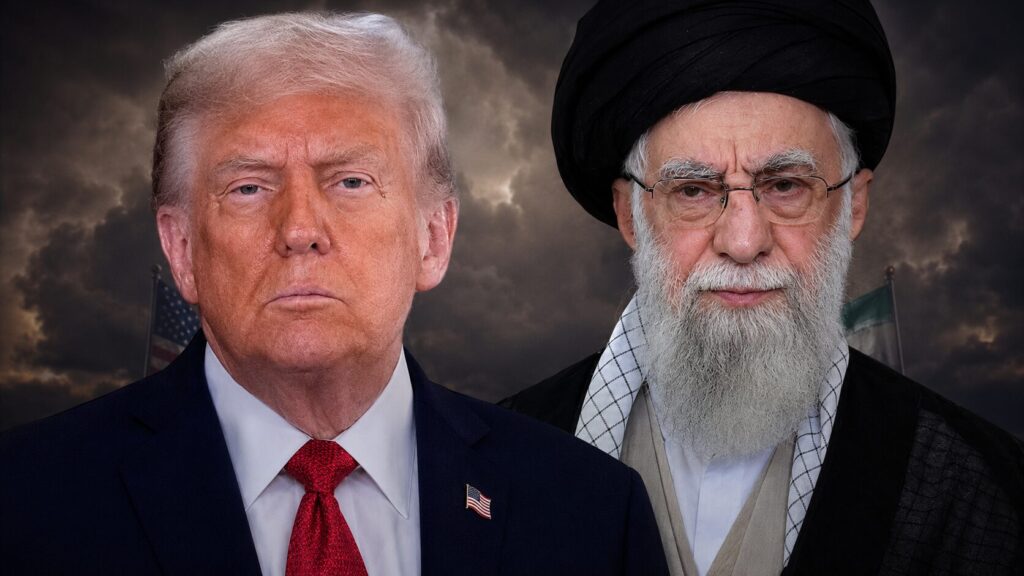
The confrontation between the United States and Iran is no longer merely a passing political crisis or a diplomatic dispute over the nuclear issue. Rather, it has become one of the longest and most complex geopolitical conflicts in the contemporary international system. Over more than four decades, this confrontation has reshaped the map of influence in the Middle East, affected global energy markets, redefined the concept of regional deterrence, and pushed the region to the brink of explosion on multiple occasions.
When we speak today about the U.S.-Iran war, we are not referring to a conventional military conflict in the traditional sense. Instead, we are discussing a multi-dimensional historical struggle that encompasses politics, economics, sanctions, security, intelligence operations, proxy warfare, and nuclear deterrence. It is a conflict that neither side has been able to decisively resolve despite possessing significant instruments of power.
Revolution and Rupture
To understand what is happening today, it is necessary to return to 1979, when the Islamic Revolution overthrew the regime of Shah Mohammad Reza Pahlavi, who represented Washington’s most important strategic ally in the Gulf and the Middle East.
The fall of the Shah was not merely a domestic political change within Iran; it was a strategic earthquake for the United States, which lost one of the principal pillars of its regional influence. From the very beginning, the Islamic Republic adopted a political discourse centered on rejecting American hegemony and describing Washington as the “Great Satan,” while the United States viewed the new regime as a direct threat to its interests and allies.
Since the hostage crisis involving employees of the U.S. Embassy in Tehran, a deep hostility emerged that subsequent decades failed to overcome. The crisis was not merely diplomatic; it laid the foundation for the near-total collapse of trust between the two sides. Each party came to regard the other as a long-term strategic threat rather than a temporary adversary with whom an ordinary political settlement could be reached.
Influence and Expansion
Over the following decades, the nature of the conflict evolved from an ideological confrontation into a broad geopolitical competition. Emerging from the Iran-Iraq War with the conviction that its security could not depend solely on international balances of power, Iran began constructing an extensive regional network of influence stretching from the Gulf to the Mediterranean.
Conversely, the United States sought to prevent Iran from becoming a dominant regional power capable of threatening the security arrangements that Washington had established in the region since the end of the Second World War.
As a result, Iraq, Syria, Lebanon, Yemen, and the Gulf became overlapping arenas of influence between the American and Iranian projects. The issue was no longer tied to Iran’s geographical borders alone but to its position within the broader regional order. Therefore, any interpretation of the conflict that focuses solely on the nuclear issue overlooks the deeper reality that the core of the crisis revolves around a larger question: Who possesses the ability to shape the political and security balance of the Middle East?
The Nuclear File
At the beginning of the twenty-first century, the conflict entered a more sensitive phase as controversy surrounding Iran’s nuclear program intensified. For the United States, concern stemmed not only from the possibility of Iran acquiring a nuclear weapon but also from the broader implications for regional power balances. The emergence of Iran as a state possessing military or near-military nuclear capabilities would fundamentally alter traditional deterrence equations.
Iran, however, viewed its nuclear program as a sovereign and strategic project aimed at securing the country’s future and strengthening its international standing. Iranian leaders also drew lessons from the experiences of states that had been subjected to external pressure or intervention, concluding that advanced nuclear capabilities could serve as a guarantee against any attempt to overthrow the regime or impose foreign will upon it.
Consequently, the nuclear issue became a symbol of a larger struggle involving sovereignty, deterrence, and international recognition rather than merely a technical dispute over uranium enrichment levels.
Agreement and Collapse
When the nuclear agreement was reached in 2015, it appeared as though both sides had finally arrived at a historic point of equilibrium. Iran accepted restrictions on its nuclear program in exchange for the gradual lifting of economic sanctions, while Western powers viewed the agreement as a successful mechanism for delaying the prospect of military escalation.
However, the agreement contained the seeds of its own weakness from the outset because it focused exclusively on the nuclear issue while leaving other contentious matters unresolved. Ballistic missiles, regional influence, relations with Israel, and non-nuclear sanctions all remained outside the framework of the deal.
When the administration of Donald Trump withdrew from the agreement in 2018, the trust upon which it had been built collapsed, and relations returned to a level of tension greater than that which existed before its signing.
Since then, Iran has become convinced that any agreement with Washington can be overturned with a change in U.S. administration, while the United States has become convinced that Iran uses agreements as a means of buying time and strengthening its strategic capabilities.
Mutual Deterrence
Since 2019, the conflict has entered a new phase that can best be described as one of “asymmetrical mutual deterrence.” The United States enjoys overwhelming military superiority in terms of technology, military bases, air power, and naval capabilities. Iran, however, possesses a different set of tools that make any war against it extremely costly.
Over the past decades, Tehran has successfully built a deterrence architecture based on long-range missiles, unmanned aerial vehicles (UAVs), regional networks of influence, and cyber capabilities. As a result, any American decision to launch a large-scale military campaign against Iran would carry risks extending far beyond Iranian territory, threatening Gulf security, global energy markets, and American interests throughout the region.
At the same time, Iran understands that its ability to inflict damage on the United States does not equate to an ability to defeat it militarily. Consequently, Tehran has adopted a strategy aimed at raising the cost of confrontation rather than seeking outright military victory.
International Transformations
One of the factors that has significantly complicated the conflict in recent years is the profound transformation of the international system. The world is no longer unipolar as it was during the 1990s. China has emerged as a global economic power, Russia has reasserted itself as a major player in international security affairs, and Iran has expanded its relations with countries that compete strategically with the United States.
These developments have reduced the effectiveness of traditional American pressure tactics and provided Tehran with greater room for political and economic maneuvering. Moreover, Iran’s accession to new international and economic groupings has reinforced its perception that it is no longer as isolated as it once was.
Consequently, the current conflict is not simply a dispute between Washington and Tehran. It also reflects a broader international competition among major powers over the future shape of the global order.
The Dilemma of Decisive Victory
The fundamental paradox of the U.S.-Iran crisis is that both sides possess the ability to obstruct the other, yet neither possesses the ability to achieve a final and decisive victory.
For more than four decades, the United States has failed to change the Iranian regime, terminate its nuclear program, or decisively curtail its regional influence. Conversely, Iran has failed to expel the United States from the Middle East, fully dismantle the sanctions regime, or impose its regional vision on all actors.
This situation has produced what may be described as a “negative equilibrium,” in which each side can prevent the other’s success but remains incapable of securing complete victory for itself. This dynamic explains why the crisis has persisted for decades without evolving into either a comprehensive war or a lasting peace.
A Defining Moment
What we are witnessing today represents the most dangerous phase in the history of the conflict since the Iranian Revolution. Negotiations repeatedly stall, Iran’s nuclear program has reached advanced levels of enrichment, military and security pressures continue to mount, and the regional environment has become increasingly fragile due to successive wars and crises.
Despite these realities, strategic indicators do not suggest that either side seeks a full-scale confrontation. The United States understands that a major war against Iran could ignite the entire region and trigger severe disruptions to the global economy. Iran, meanwhile, recognizes that an open confrontation with Washington could threaten domestic stability and expose its infrastructure to massive destruction.
The actual behavior of both parties therefore reveals a clear equation: escalation is being used to improve negotiating positions, not to pursue war for its own sake.
The Future of the Conflict
When examining the broader trajectory of the conflict over the coming years, the most realistic scenario is neither comprehensive war nor complete peace. Instead, it is the continuation of a condition of “managed conflict,” in which sanctions, pressure campaigns, negotiations, and limited military tensions coexist simultaneously without reaching a point of ultimate explosion.
Partial agreements and temporary understandings may emerge to ease specific crises. However, it is difficult to imagine a comprehensive historic agreement capable of resolving all outstanding issues at once. The gap between the two sides is simply too deep to be bridged through technical negotiations over the nuclear file alone.
The essence of the conflict today is not about the number of centrifuges, the volume of frozen assets, or even the nature of sanctions. Rather, it concerns Iran’s place in the Middle East, the limits of American influence in the region, and the shape of the regional order that will emerge over the coming decades.
The War of 2025
The year 2025 witnessed the most dangerous direct confrontation between the United States and Iran since the establishment of the Islamic Republic in 1979. After decades of shadow wars and indirect operations, the crisis entered a new phase when Israel launched extensive attacks in June 2025 against Iranian military and nuclear facilities. The United States subsequently intervened directly by targeting major nuclear sites inside Iran.
These strikes represented the first large-scale American attack on Iranian territory in decades. Their objective was to slow Iran’s nuclear program and prevent Tehran from moving closer to the nuclear threshold. Iran responded by targeting facilities and interests associated with the United States throughout the region, plunging the Middle East into an unprecedented period of tension.
Although the conflict known as the “Twelve-Day War” ended with a ceasefire, it did not resolve the crisis. Instead, it demonstrated that the old rules of engagement had collapsed and that direct confrontation had become a viable option. The war also showed that military strikes could delay Iran’s nuclear program but could not eliminate it entirely, thereby shifting the conflict from a strategy of containment toward a new phase of deterrence restructuring between the two adversaries.
The War of 2026
If the war of 2025 shattered the psychological barriers between the two sides, the war of 2026 marked the transition to a multi-front regional conflict.
The confrontation erupted once again at the end of February 2026 following the collapse of negotiation efforts and the exchange of accusations regarding Iran’s nuclear program. Military operations expanded to encompass the Arabian Gulf, the Strait of Hormuz, and several other regional theaters. The region witnessed reciprocal missile attacks, drone operations, and naval strikes.
Unlike the war of 2025, which was limited in duration, the conflict of 2026 took on the character of a prolonged war of attrition. The United States sought to pressure Iran through military and economic means, while Tehran attempted to exploit its geographic position and regional networks to raise the costs of war for Washington and its allies.
As the months passed, neither side succeeded in achieving a decisive strategic victory. This led to a growing realization that a comprehensive war would produce no true winner, but rather exhaust all parties while inflicting severe damage on the global economy and international energy security.
The Strait of Hormuz
The Strait of Hormuz was not merely a secondary theater in the conflict; it became the very heart of the strategic confrontation between Washington and Tehran.
Approximately one-quarter of the world’s seaborne oil trade passes through this narrow waterway, making it one of the most critical energy arteries of the global economy. Iran recognized from the outset that its ability to threaten maritime traffic in Hormuz provided it with a powerful leverage tool that far exceeded its conventional military capabilities.
During the 2026 crisis, commercial shipping faced major disruptions, while tankers and merchant vessels became targets of attacks and security threats. These developments contributed to rising energy prices and heightened fears of a major global oil shock.
The crisis also encouraged many countries to seek alternative routes for transporting oil and reducing dependence on the Strait. Consequently, the importance of Hormuz lies not merely in its geographic location as a maritime passage, but in its role as a meeting point between regional security and the global economy.
Any escalation in the Strait threatens not only Iran and the United States but also reverberates immediately through global markets, supply chains, and energy prices across multiple continents.
The Negotiation Track
Despite the intensity of military confrontation, diplomatic channels never closed completely.
Since 2025, mediation efforts have continued through Oman, Switzerland, and other intermediaries. During 2026, these initiatives expanded as additional regional and international actors joined the diplomatic process.
Yet the fundamental problem remained unresolved. Iran sought sanctions relief, the release of frozen assets, and guarantees that the United States would not again withdraw from any future agreement. Washington, meanwhile, insisted on strict limitations on Iran’s nuclear program and missile capabilities.
To date, negotiations appear closer to crisis management than conflict resolution. Both sides recognize that continued warfare would harm everyone involved, yet profound mistrust prevents the achievement of a final settlement.
For this reason, current negotiations cannot be described as traditional peace talks. Rather, they are negotiations aimed at buying time and preventing a larger explosion. Each side seeks to strengthen its military and political position before making meaningful concessions, which explains the persistent deadlock despite the intensity of international mediation and diplomatic engagement.
The Deferred Ending
It can be argued that the U.S.-Iran conflict is unlikely to conclude with an overwhelming victory for either side, because the very nature of the struggle makes such an outcome improbable.
This is not a war of armies as much as it is a confrontation of wills, strategies, and long-term visions. Accordingly, the most likely future scenario is the continuation of a forced coexistence between the two adversaries within a complex framework of deterrence, pressure, and negotiation.
If the twentieth century witnessed a U.S.-Soviet rivalry that ultimately ended with the collapse of one side, the American-Iranian conflict appears fundamentally different. It more closely resembles a long-term competition whose instruments continually evolve while its core dynamics remain unchanged.
Therefore, the real question is not: “When will the U.S.-Iran war end?” Rather, it is: “How will the Middle East be reorganized while this conflict continues?”
Current indicators suggest that the region is moving toward a new phase of influence redistribution, one in which the American-Iranian confrontation will remain among the most important factors shaping the Middle East for decades to come.