
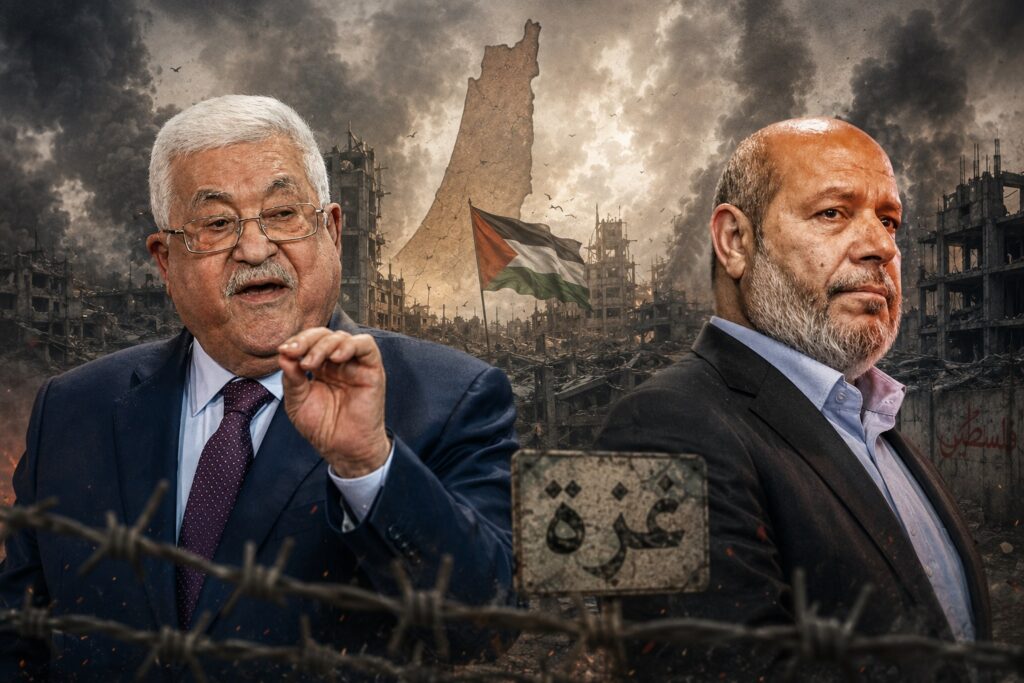
At a time when the Palestinian people are facing one of the most dangerous and complex phases in their contemporary history, the issue of Palestinian national unity has returned to the forefront of the political scene as the most pressing and controversial question. While Israeli wars and attacks continue and humanitarian and political crises deepen in both the Gaza Strip and the West Bank, Palestinian division remains one of the most significant challenges confronting the Palestinian national project for decades. Many observers even argue that this division has become no less dangerous than the external challenges imposed by the Israeli occupation over more than seven decades.
Although Palestinians share the same land, identity, cause, and destiny, the Palestinian arena has remained captive to deep political, ideological, and organizational divisions that have prevented the formation of a unified national front capable of confronting escalating challenges. This raises fundamental questions about the real reasons behind the failure of Palestinian unity, why dozens of reconciliation agreements sponsored by Arab and regional states have failed to end the division, and why disagreements among Palestinian factions have evolved from ordinary political differences into a prolonged political and geographical reality.
Current developments also raise deeper questions concerning the circumstances that led to the emergence of the Islamic Resistance Movement (Hamas) and its rise as a major actor in Palestinian politics, the reasons why large segments of Palestinians embraced its political and resistance-oriented project, the complex relationship between Hamas, Fatah, and the Palestinian Authority, and how regional and international transformations have contributed to deepening the division and reshaping the balance of power within the Palestinian political system.
Amid the ongoing war and the unprecedented strategic changes it has generated, the Palestinian cause appears to stand at a historic crossroads that may redefine the entire Palestinian political landscape, whether regarding the future of the Gaza Strip, the role of the Palestinian Authority in the West Bank, the possibility of reviving national reconciliation, or even the shape of Palestinian leadership in the years ahead. Understanding the roots, causes, and consequences of Palestinian division has therefore become essential to understanding the future of the Palestinian cause itself and anticipating the potential paths it may take in a period characterized by uncertainty, complexity, and rapid transformation.
Roots of the Division
The Palestinian division witnessed today was not a sudden event or the result of a temporary political disagreement. Rather, it is the product of historical, political, and organizational accumulations extending over several decades. Since the establishment of the modern Palestinian national movement in the 1960s, fundamental differences emerged among Palestinian forces regarding the nature of the national project, methods of resistance, relations with Arab regimes, and the form of the future Palestinian state. Although these disagreements remained for long periods under the umbrella of the Palestine Liberation Organization (PLO), they never disappeared and instead remained dormant until circumstances allowed them to surface more clearly.
During the early decades of the conflict with Israel, the PLO succeeded in serving as the umbrella organization for most Palestinian factions. Nevertheless, ideological differences between the nationalist current led by Fatah and the leftist, nationalist, and Islamist currents persisted. Each faction viewed the conflict and the means of managing it through a different lens, making Palestinian unity more a product of temporary consensus than a genuinely unified political project.
Rise of the Islamists
The 1970s and 1980s witnessed significant transformations within Palestinian society, as Islamist movements gained increasing influence in the occupied Palestinian territories. This expansion was fueled by widespread frustration following a series of political and military setbacks suffered by the traditional national movement. Regional developments and the rise of Islamic movements across the Arab and Islamic worlds further reinforced this trend.
In this context, Hamas emerged during the First Palestinian Intifada in 1987 as an ideological and organizational extension of the Muslim Brotherhood in Palestine. It presented itself as a resistance project distinct from that of the PLO, rejecting recognition of Israel or engagement in long-term political settlements and viewing armed resistance as the primary path to liberating Palestine. This created a profound strategic divergence between Hamas and Fatah from the outset.
The Oslo Accords
The signing of the Oslo Accords in 1993 marked a pivotal turning point in Palestinian history. The PLO leadership under Yasser Arafat chose to pursue negotiations with Israel in pursuit of an independent Palestinian state, while Hamas and the Palestinian Islamic Jihad regarded the agreement as a concession of historic Palestinian rights and a grant of legitimacy to Israel without genuine guarantees for ending the occupation.
From that moment onward, the division acquired a more explicit political and strategic character. The Palestinian Authority emerged as a direct outcome of Oslo, while Hamas remained outside its core institutions. Two competing Palestinian visions took shape: one based on negotiations and international diplomacy, and the other centered on armed resistance as the primary means of achieving national objectives.
Struggle Over Legitimacy
The accumulated contradictions reached their peak following the 2006 Palestinian legislative elections, in which Hamas achieved a major victory over Fatah. The outcome created a political earthquake within Palestinian society, placing Hamas in government for the first time while Fatah perceived the result as a direct challenge to its historic leadership role within the Palestinian national movement.
The conflict extended beyond political disagreements to encompass struggles over legitimacy, authority, security institutions, and governance. Amid regional and international intervention and the blockade imposed on the new government, tensions escalated until armed confrontations erupted in Gaza in 2007. Hamas subsequently took control of the Gaza Strip, while the Palestinian Authority under Fatah retained control of the West Bank, initiating the geographical and political division that continues today.
Geographical Separation
The division between Gaza and the West Bank created an unprecedented Palestinian reality, with two separate authorities, security establishments, and administrative systems, each possessing distinct priorities, alliances, and methods of operation. Over time, what began as a temporary crisis evolved into an entrenched political structure, with each side developing interests tied to maintaining the status quo.
Years of division also produced social, economic, and administrative gaps between residents of Gaza and the West Bank, making institutional reunification far more complex than merely signing another political agreement.
Conflicting Visions
Differences in political vision remain among the most important reasons behind the failure of Palestinian reconciliation. Fatah and the Palestinian Authority continue to rely on diplomacy, international recognition, and political solutions as the path toward statehood. Hamas and other resistance factions, however, argue that the negotiation process launched by Oslo has failed to achieve Palestinian national goals and that resistance in its various forms remains the most effective means of pressuring Israel.
This disagreement extends beyond political tactics to encompass the nature of the Palestinian political system itself, the future relationship with Israel, the role of armed groups, and the shape of a future Palestinian state, making consensus exceedingly difficult to achieve.
Regional Interference
The Palestinian division cannot be understood in isolation from its regional environment. Various Palestinian factions have been linked to different regional axes and have been influenced by the shifting balances and conflicts that have shaped the Middle East over recent decades. As a result, the Palestinian file has often become an arena where regional and international interests intersect.
Some external actors have also treated Palestinian division as a tool for advancing their own political and security objectives, further complicating reconciliation efforts and weakening prospects for a lasting settlement among Palestinian factions.
The Palestinian Authority’s Dilemma
The Palestinian Authority faces unprecedented challenges in the West Bank. Beyond economic pressures and diminishing prospects for a political settlement, growing questions have emerged within Palestinian society regarding the Authority’s future role and relevance, particularly amid continued Israeli settlement expansion and increasing military operations and incursions into Palestinian cities.
The Authority is also grappling with a crisis of political legitimacy due to the absence of general elections for many years, contributing to declining public confidence in official institutions, especially among younger generations.
The Reality in the West Bank
In recent years, the West Bank has become a theater of escalating security and military tensions. Israeli settlement activity has expanded significantly, confrontations between Palestinians, Israeli forces, and settlers have intensified, and new resistance groups have emerged in several Palestinian cities and refugee camps, reflecting growing public frustration.
At the same time, the Palestinian Authority finds itself trapped in a difficult equation: preserving institutional stability while facing increasing public demands for a tougher stance toward Israeli policies.
The Gaza War
The latest war in Gaza has once again placed Palestinian unity at the center of the national agenda. The conflict has exposed the magnitude of the challenges facing Palestinians under conditions of continued division and highlighted the need for unified political leadership capable of managing the next phase and addressing the humanitarian, political, and security consequences of the war.
At the same time, the war has deepened the complexity of the situation, raising fundamental questions about Gaza’s future after the cessation of hostilities, the nature of political and security administration in the territory, and the role of various factions in the post-war period. These issues remain subjects of profound disagreement among Palestinian actors.
Prospects for Reconciliation
Despite dozens of agreements signed in various Arab capitals over the years, most reconciliation efforts have failed because of a lack of mutual trust, disagreements over power-sharing arrangements, disputes regarding the future of security institutions, and conflicting visions of a common political program.
All Palestinian parties recognize that national unity is a strategic necessity in confronting current challenges. However, translating this recognition into practical action continues to collide with complex political and organizational calculations, making reconciliation more of a declared objective than a tangible reality.
The Future of the Palestinian Cause
The future of Palestinian unity largely depends on the ability of Palestinian factions to formulate a new national project capable of transcending traditional divisions and responding to the profound transformations that have reshaped the Palestinian cause over recent decades. Continued division weakens the Palestinian position politically, diplomatically, and socially, whereas unity could strengthen the ability to confront mounting challenges.
Amid ongoing war and rapidly changing regional and international dynamics, the Palestinian cause appears to be entering a decisive phase that may fundamentally reshape the Palestinian political landscape, whether through a new formula for national reconciliation or through alternative political arrangements that alter the balance of power within Palestinian society. The coming years may therefore prove to be among the most sensitive and consequential periods in the history of the modern Palestinian national movement.