
The central question raised by this development is whether the withdrawal has genuinely expanded national decision-making autonomy or merely shifted the Sahel states from a negotiable political constraint to a more costly form of economic and security isolation. Based on the available evidence, a strategic reading points to a key conclusion: the withdrawal has produced a sovereign gain in terms of freedom of decision-making and political discourse, but it has not, to date, produced complete material sovereignty. Sovereignty is not measured solely by a state’s ability to reject the rules of a regional institution; it also depends on its capacity to secure markets, transportation corridors, financing, and protection for its population against transnational threats. These capabilities remain limited.
The withdrawal came against the backdrop of a growing crisis of confidence between ECOWAS and the military authorities that came to power in Mali, Burkina Faso, and Niger. These authorities viewed the organization as having moved beyond its role as a framework for economic cooperation to become an instrument for imposing particular political models and punishing states that did not comply with demands for a rapid return to constitutional rule. This dynamic was particularly significant in the regional context. Tensions reached their peak following the coup in Niger in July 2023, which prompted ECOWAS to impose comprehensive border closures, suspend trade and financial transactions, and freeze assets before most of these measures were lifted in February 2024 on humanitarian grounds. From the perspective of the Sahel leaders, the crisis demonstrated that membership in the organization could, during periods of disagreement, become a source of pressure not only on governments but also on societies, a challenge to which the organization was unable to respond effectively.
For this reason, the withdrawal carried a political meaning that went beyond trade provisions. It gave the three governments greater freedom to determine the duration of their transitional periods, choose their military partners, and reshape their relations with external powers, including France as a former colonial power, as well as other international actors, without being directly subject to ECOWAS decisions concerning governance or sanctions. It also enabled the three governments to build domestic legitimacy around a discourse of liberation from external tutelage and the restoration of national dignity. In this sense, the decision represented a symbolic assertion of sovereignty, marking a shift from institutional compliance toward the pursuit of national priorities. It restored to the state greater authority over its conception of security and alliances.
The withdrawal can therefore be understood as an attempt to rebuild regionalism on the basis of political and security cohesion among regimes facing similar threats, rather than remaining within a broader organization in which systems of government and strategic priorities differ considerably. However, it is essential to examine the nature of the sovereignty achieved. Much of what has been gained appears to constitute “negative sovereignty,” meaning the ability to reject external constraints and decisions. “Positive sovereignty,” by contrast, refers to the ability to possess the resources and institutions necessary to implement national choices without becoming dependent on an alternative partner or vulnerable to economic shocks. This dimension remains subject to significant uncertainty. Changing alliances does not eliminate weaknesses in military and financial capabilities, and dependence on new partners may simply replace one form of dependency with another. Therefore, the withdrawal cannot constitute a complete strategic achievement unless the Sahel project develops autonomous institutional, economic, and security capabilities rather than becoming merely a political front opposing ECOWAS.
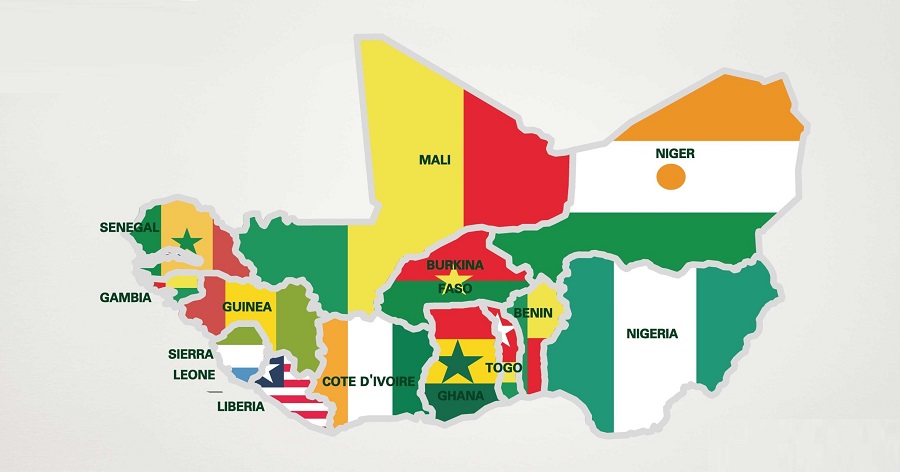
The risks of withdrawal become clearer when considering the original function of ECOWAS. The revised treaty provides for the creation of a common market through the removal of tariffs and non-tariff barriers, the adoption of a common external tariff, and the free movement of people, goods, services, and capital, as well as rights of residence and establishment. These gains are particularly important for Mali, Burkina Faso, and Niger because they are landlocked countries that depend on ports and overland corridors passing through coastal states such as Benin, Togo, Ghana, Côte d’Ivoire, and Senegal. Consequently, any disruption at borders or increase in transit costs does not remain a limited trade problem; it can quickly translate into higher prices for food, fuel, and production inputs. Niger appears relatively more exposed because of the strength of its trade links with Nigeria and its economic vulnerability following months of sanctions. Withdrawal therefore creates a strategic paradox: it aims to expand political autonomy while potentially narrowing economic policy space by increasing the cost of imports and financing.
At the same time, the three countries’ continued membership in the West African Economic and Monetary Union has allowed them to preserve important monetary and trade links with several neighboring states, thereby reducing the shock of separation. Even after the withdrawal took effect, the three states continued to recognize travel documents bearing the ECOWAS emblem and temporarily maintained freedom of movement, residence, and establishment, while goods and services from the three countries continued to benefit from the trade liberalization regime pending the determination of future relations. This means that the final cost will not be determined by legal withdrawal alone, but rather by the arrangements that replace membership. A flexible negotiated separation could preserve market access and mobility, whereas a competitive break could impose reciprocal tariffs and barriers. The issue therefore requires continued monitoring and closer examination.
From a security perspective, the rationale for withdrawal becomes understandable to some extent if viewed through the lens of states that felt ECOWAS had placed greater emphasis on confronting military coups than on successfully containing the expansion of armed groups. Terrorism in the Sahel, however, is inherently transnational, as are networks involved in arms, human, and drug trafficking. No country in the region can therefore contain these threats entirely on its own. United Nations reports have warned that fragmented regional responses, divergent priorities, and insufficient funding have hindered cooperation against terrorism and organized crime. The withdrawal could therefore intensify existing political, security, social, and economic challenges.
The Confederation of Sahel States does provide a framework for greater coordination among the three countries within a geopolitical space that is particularly exposed to violence. It may also allow faster decision-making than an organization composed of many states with different interests and calculations. On the other hand, however, it excludes coastal and strategically important states that control major trade gateways and possess information and capabilities essential for combating networks extending southward. The risk, therefore, does not necessarily lie in the creation of a new regional framework, but in the possibility that it could become a closed and competing bloc that prevents the exchange of intelligence and operational coordination with ECOWAS.
The withdrawal itself has revealed a deeper crisis within the ECOWAS model. The organization sought to function simultaneously as an economic community and a guardian of constitutional legitimacy. However, broad sanctions led some communities to perceive the organization as punishing populations in an effort to pressure governments. This dimension becomes particularly evident in the issue of military coups. Accepting coups without consequences would undermine the political norms developed by the organization and could encourage further military seizures of power. The issue, therefore, is not whether democracy should be defended, but rather how to choose instruments that sufficiently distinguish between applying pressure to political elites and protecting the daily interests of populations. The lifting of sanctions on Niger on humanitarian grounds provides an important example of the recognition of this dilemma, although it came only after the sanctions had generated significant humanitarian concerns.
Moreover, relying on the rhetoric of sovereignty is insufficient for the three countries unless political legitimacy is accompanied by tangible improvements in security, public services, and overall economic conditions. The alternative regional project will ultimately be assessed according to its ability to facilitate trade, guarantee citizens’ rights across borders, finance infrastructure, and achieve tangible security outcomes that directly contribute to stability. If the new integration project remains confined to defense cooperation and symbols of sovereignty, it could transform from an instrument of emancipation into a smaller and more geographically constrained space than the market the three countries have left.
For this reason, the most realistic strategic way forward is neither a forced return to the previous arrangement nor the construction of a wall between the two blocs. Instead, the two sides could move from full political membership toward “gradual functional integration,” taking into account the realities described above while avoiding previous shortcomings. This could involve negotiating an association agreement between ECOWAS and the Confederation of Sahel States that protects the free movement of people, guarantees the transit of goods to ports, establishes clear customs rules, protects the rights of workers and traders, and creates a joint security mechanism for intelligence sharing and border monitoring.
The withdrawal of Mali, Burkina Faso, and Niger was neither an unequivocal victory for sovereignty nor a definitive loss for regional integration. Rather, it represented a trade-off between an immediate political gain and potentially significant strategic costs. On the one hand, the withdrawal freed the three countries from ECOWAS authority in areas related to political transitions, sanctions, and alliances, while providing them with greater space to develop their own security and regional vision. On the other hand, however, it did not eliminate the realities of geography. The three countries are landlocked, deeply interconnected with their neighbors socially and economically, and confronted by armed threats that do not recognize borders. As the separation in trade, transportation, and security expands, the material capacity of these states to exercise the sovereignty they sought to reclaim may diminish.
Accordingly, the withdrawal can be seen as having strengthened national decision-making autonomy at the legal and symbolic levels, while simultaneously creating the risk of deeper isolation if durable cooperation mechanisms with ECOWAS are not established. Sustainable sovereignty is not necessarily the opposite of regional integration; rather, it depends on the form and conditions of that integration. The real challenge for the Sahel states will be to transform their withdrawal from an act of political protest into a project of institutional state-building while preserving cross-border interests. For ECOWAS, meanwhile, the challenge is to move from a logic of punishment toward a diplomacy based on shared interests, demonstrating that regional integration can protect populations rather than becoming an instrument of pressure against them.