To the extent that electronic or digital media have brought about a qualitative transformation at multiple levels and across various fields—overcoming many of the shortcomings of traditional media, expanding public participation, deepening interactivity, and facilitating the rapid transmission and circulation of information—they have also produced negative effects on thought and public awareness, particularly with regard to the depth of understanding, reception, and analysis.
A simple review of social media platforms is enough to reveal the growing dominance of the “trend” at the expense of analysis and logical reasoning. This demonstrates that the risks associated with digital media are increasingly competing with, and in some contexts may even outweigh, its advantages, particularly when speed becomes an end in itself and popularity becomes the primary measure of content value rather than its accuracy, depth, and relevance.
If the fundamental role of media is to provide people with accurate information and the facts necessary to understand their world, thereby contributing to the formation of awareness and the development of sound opinions on various issues, media channels have undergone continuous development. They have moved from traditional means of communication, such as newspapers, radio, and television, to new forms of communication, beginning with social media and extending to podcasts and various digital platforms.
This transformation represents a communication revolution whose dimensions we are experiencing today. In terms of its impact on the production and circulation of knowledge, it can be compared to the revolution brought about by the invention of printing in the fifteenth century, when information moved from a limited sphere into a broader space with far greater capacity for dissemination and circulation.
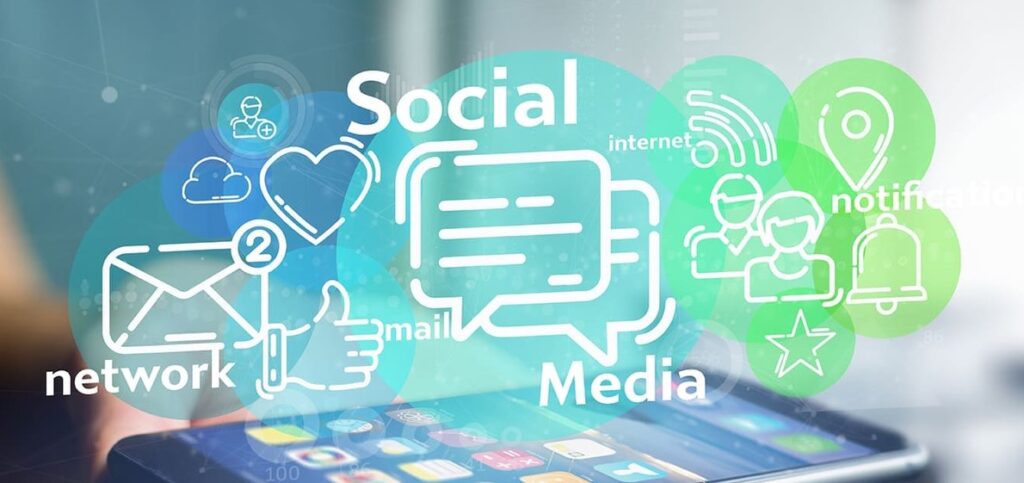
Digital media can be simply defined as the integration of communication technologies with media, enabling the rapid production, dissemination, and exchange of information. While information in traditional media generally moved from the source to the recipient in a one-way process, new or digital media have introduced a more interactive relationship between the sender and the recipient. This can be seen, for example, in the ability of a follower of an online news website to leave a comment expressing an opinion about published content. In traditional media, however, such feedback often required more time, effort, and cost, such as calling a television or radio program to participate in a discussion or sending a letter to a newspaper.
Interactivity and participation have contributed to breaking an important aspect of the monopoly over information previously held by official institutions and communication professionals. The free or relatively inexpensive access to social media platforms has also enabled both elites and non-elites to become active participants in the communication process. As a result, the audience has moved away from the position of a passive recipient toward a more active role based not merely on reaction, but also on participation and action.
Digital media have also provided an unprecedented level of speed in accessing information, corresponding to the demands of the contemporary era and the rapid technological revolution. However, while this speed responds to the needs of modern society, it has also had profound effects on thought and awareness, particularly when the speed of accessing information becomes a speed of judgment, leaving the recipient insufficient time to verify, analyze, compare, and critically assess what they receive.
The enormous flow of information has contributed to a degree of intellectual distraction and uncertainty in forming opinions and making decisions. At the same time, technology has enabled almost anyone to report events directly from the scene using relatively simple tools. Although this participation has expanded the scope of coverage, it has created a serious challenge in distinguishing accurate information from false information and reliable reporting from content produced or circulated without verification.
The role played by social media in the political events and transformations witnessed in the Arab region in 2011 cannot be ignored. Digital communication technologies enabled citizens to communicate and coordinate rapidly and effectively, contributing to the organization of digital and popular campaigns through which civil activists used digital tools to express and mobilize support for their demands. This was particularly evident in Tunisia and Egypt.
Nor can we ignore the continuing digital campaigns that have emerged since then, through which activists, institutions, and individuals mobilize around specific issues, seek to influence public opinion, and encourage the adoption of particular positions or policies. However, the other side of this capacity is that the rapid flow and easy circulation of information may reduce the time available for rational judgment, transforming an issue that requires reading and analysis into a position that requires nothing more than a “like,” share, or comment.
Within this transformation, content creation has become a widespread practice, regardless at times of the quality or depth of the content or its relevance to fundamental issues affecting individuals and societies. Short videos have become highly effective in attracting attention, sometimes surpassing the ability of longer forms of content to compete. Consequently, some audiences have become increasingly inclined toward fast and concise content and less willing to devote time to reading a book carefully, following a news bulletin, or listening to a lengthy discussion program that examines an issue from multiple perspectives.
This brings us to the concept of the “Dictatorship of the Moment.” It describes a situation in which the immediate moment becomes more influential than the depth of the issue itself, determining what deserves attention and what should be ignored according to the standards of speed, popularity, and engagement. Human beings, by virtue of their cognitive abilities, need time for reflection, examination, comparison, and analysis before reaching a judgment or forming a sound opinion. The digital environment, however, may push in the opposite direction by encouraging immediate responses and rapid emotional reactions.
The danger of this dictatorship becomes particularly apparent in Arab societies when the number of views becomes a measure of the value of content. In such a context, numbers and engagement metrics may dominate the thinking of content creators, making visibility their primary objective, even when this sometimes comes at the expense of the quality of the content and the depth of the issue being addressed. At the same time, images, colors, provocative headlines, and immediate emotional reactions may dominate the recipient’s attention at the expense of analysis, verification, information filtering, and source checking.
If this condition continues without sufficient awareness or safeguards, it may weaken critical and flexible thinking and potentially lead to what could be described as “intellectual dullness.” This occurs when individuals lose their ability to question what they consume, particularly when hateful or inflammatory discourse between religious, sectarian, or social groups becomes dominant. The recipient then ceases to be merely a reader or viewer and becomes a consumer of content, repeating what they receive without making a serious effort to examine, criticize, or verify it. The mind no longer rejects poor-quality content; instead, it absorbs and reproduces it.
Nevertheless, it would be inappropriate to generalize or portray social media solely as a source of threat. These platforms remain powerful tools that can be used positively to disseminate knowledge, strengthen public participation, support social causes, and broaden the scope of dialogue. Here, the role of opinion leaders, intellectuals, academics, and journalists becomes particularly important. They bear a greater responsibility for producing substantive content, promoting responsible discourse, and helping protect public awareness from being overwhelmed by superficial or misleading content.
The problem, therefore, does not lie in technology itself, but rather in the way it is used and in the standards governing the production, reception, and circulation of content. Social media are ultimately a double-edged sword. Their positive impact depends on the extent to which their capabilities are used consciously and constructively, while their negative side carries risks that increase as critical thinking gives way to the speed of circulation.
Perhaps the phrase “the transformation from deep issues to the dictatorship of the moment” captures a central dimension of this problem. The danger does not simply lie in the fact that the world is becoming faster; rather, it lies in the possibility that the human mind itself is increasingly expected to think at the same speed—to judge before reflecting, to react before verifying, and to consume before understanding.